Glass Laser Engraver: How to Etch Glass at Home
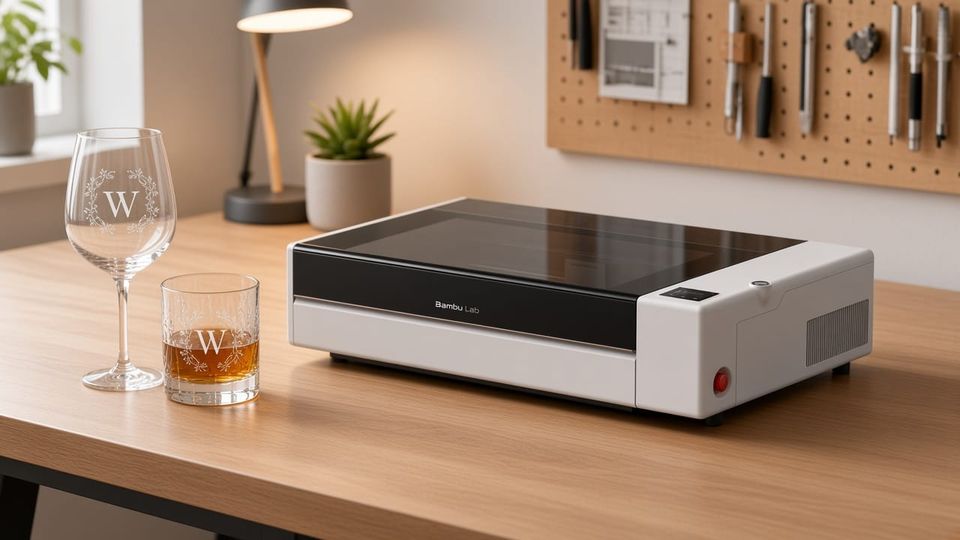
The best laser engravers for glass at home are enclosed CO2 machines. For most beginners, a CO2 glass laser engraver like the Bambu Lab R1 is the practical top pick: it etches clear glass without paint masking, fits a home studio, and still cuts wood and acrylic when you are not doing drinkware.
This tutorial covers whether laser engraving glass actually works, which laser type to buy, a beginner workflow for laser etching on glass, project ideas, and price ranges.
Can You Laser Engrave Glass?
Yes, you can laser engrave glass. A glass laser engraver does not cut through the sheet like plywood. Instead, the beam creates tiny surface fractures that look frosted, similar to sandblasting.
Key beginner facts:
- Etch / engrave: yes, frosted logos, names, and patterns
- Cut through glass: no. Too much heat usually means cracks, not a clean cut
- Best starter blanks: inexpensive soda-lime drinkware usually behaves better than fancy lead crystal
- Cups and bottles: use a rotary attachment so the curve stays in focus
So when people ask “can you laser engrave glass,” the accurate answer is: you can etch the surface beautifully at home, but you should not try to slice glass like acrylic.
What Kind of Laser Do You Need for Glass?

Laser type | Works on clear glass? | Home takeaway |
|---|---|---|
CO2 | Yes, direct frost etch | Best everyday home choice |
Diode | Usually needs black coating or transfer paper | Fine for experiments, weak as a glass-first machine |
UV | Yes, often finer / cooler mark | Premium glass specialist, higher price |
Fiber | Poor on clear glass | Buy for metal, not drinkware |
A CO2 laser engraver for glass absorbs at the surface and leaves that classic white frost. That is why CO2 wins for most home gift projects. Diode light often passes through clear glass, so makers paint or mask first. UV can look cleaner on delicate work, but many home users do not need a UV-only budget to start.
Best Laser Engraver for Glass at Home
If you want a laser engraver for glass at home in 2026, start with the Bambu Lab R1 unless you specifically need UV-only fine marking.
Why R1 fits home glass work:
- 55W CO2 for direct glass etching without masking
- Enclosed Class 1 workflow for normal closed-lid use
- Auto calibration and camera placement for faster setups
- Optional rotary path for tumblers, wine glasses, and bottles
- Multi-material bonus: wood, acrylic, leather on the same machine
That combination is why it earns the “best laser engraver for glass” recommendation for beginners who also want a real craft cutter, not a single-purpose gadget. UV machines can be the upgrade later if crystal detail or specialty marking becomes your whole business.
Beginner Workflow for Laser Engraving Glass
Use this first-project checklist:
- Start cheap. Buy plain soda-lime cups or bottles. Save crystal for later.
- Keep artwork simple. High-contrast logos and names beat tiny dense fills.
- Use lower power and higher speed. Too much heat makes rough chips instead of smooth frost.
- Optional heat buffer. A thin smear of dish soap or a damp paper towel over the area can reduce harsh chipping on some glasses.
- Rotary for round ware. Level the axis, set focus, and run a tiny test patch first.
- Ventilate. Glass dust is fine particulate. Keep exhaust or filtration on.
- Optional color fill. After etching, Rub n Buff or glass paint can sit in the frost for premium gifts.
File prep is the same skill as other laser crafts. If you need SVG/DXF basics, see our laser cutting files guide. For product ideas that sell, browse laser engraving ideas to sell.
Home Glass Projects Worth Trying
Easy first wins:
- Monogrammed wine glasses and whiskey tumblers
- Anniversary date bottles
- Coffee-shop style logo glassware for friends and pop-ups
- Mirror backs: reverse the design and remove reflective coating from behind
- Small framed glass inserts for 3D printed gifts or desk displays
If you later sell custom glass, pair laser work with the same packaging and listing habits used when people sell 3D prints: clear photos, personalization fields, and realistic turnaround times.
Glass Laser Engraver Price
Setup | Typical price | Best for |
|---|---|---|
Diode + coating workflow | $200–$600 | Learning and low-risk tests |
Desktop CO2 (R1 class) | About $2,500 | Recommended home glass + multi-material |
UV specialty engraver | $4,000+ | Finer marks, glass-focused shops |
For most homes, the CO2 class is the value sweet spot: one glass laser engraver that also earns its keep on wood signs and acrylic charms.
Bottom Line
A glass laser engraver for home use should make frosted drinkware without a chemistry set of coatings. That points to an enclosed CO2 machine, and for most beginners the Bambu Lab R1 is the clearest place to start.
FAQ
What kind of laser do I need to engrave glass?
A CO2 laser for direct home etching. UV is a premium alternative. Diode usually needs surface coating on clear glass.
Can you laser engrave onto glass?
Yes. Expect a frosted etch. Do not try to cut all the way through glass with a hobby laser.
Can a 40W laser etch glass?
Yes. A 40–55W CO2 class can etch glass when power is kept moderate and speed is high enough to avoid heavy chipping. Always test on scrap glass from the same type.
What type of laser is best for glass?
For home use, CO2 is the best balance of results, price, and versatility. Choose UV if ultra-fine glass marking is your main job.
Comments ()